Apples have always been known as one of the healthiest snacks: “an apple a day keeps the doctor away,” right? But the truth is, most apples you find at the grocery store come with something extra you didn’t bargain for: a shiny wax coating. That glossy finish may look appealing, but it can lock in pesticides and sometimes even harmful chemical compounds.
This week, we’re diving into what’s on the surface of your apples, why it matters for your family’s health, and how to remove most of the wax and residue with a simple at-home method. Plus, we’ve included practical tips for decoding produce stickers before you buy, so you can make safer choices at the grocery store, and a fun, nourishing recipe for Clean & Crisp Apple Snack Jars that’s perfect for busy days or lunchboxes. A few extra minutes in the kitchen or at the produce aisle can make a significant difference in your daily toxin load. I hope you enjoy this content and find the tips and recipes helpful for your family’s health!
What’s Happening
My daughter Tuula recently made this amazing quiche from scratch, and we wanted to share this recipe with you. It’s simple, clean, nutrient-dense, and we all loved it!
My Go-To Product of the Week
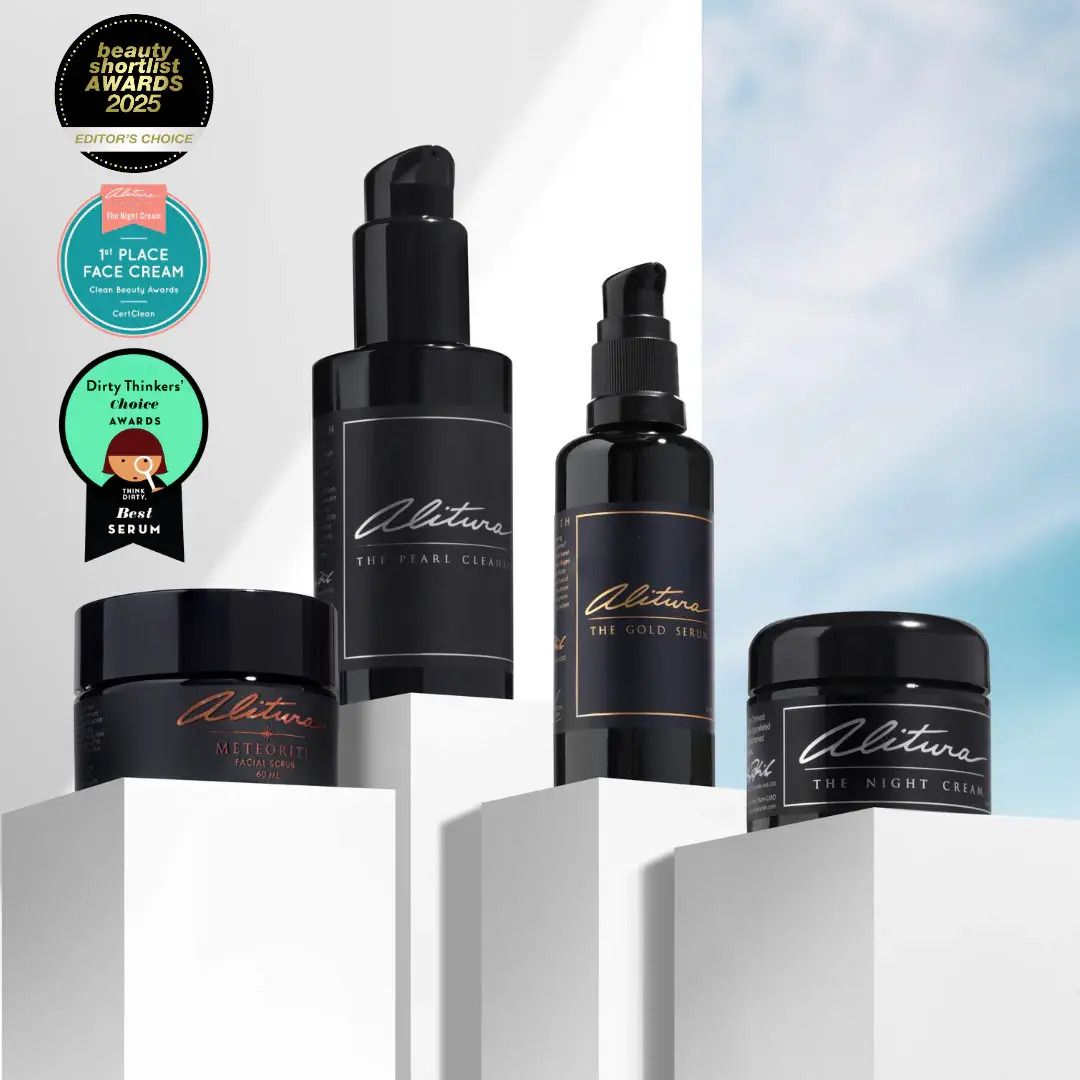
With the change in seasons, I’ve been using my Alitura routine more often. I’ve had it in my life for about six months now, and I like how straightforward and clean it feels. No extras, no hidden stuff—just simple care that I don’t have to overthink. It’s been a good addition to my day-to-day. | |
Blog Spotlights
Why You Need to Wash the Wax Off Your Apples
Apples are one of those foods that almost everyone sees as the picture of health. They appear in lunchboxes, fruit bowls, and old sayings about keeping the doctor away. But the truth is..…
Brown Rice May Not Be the Health Food You Think It Is
For years, brown rice has been the superior option to white rice. Walk down any health food aisle and you’ll see it positioned as a “whole grain,” praised for its higher fiber content and marketed as a nutrient-dense alternative. The message is simple: white rice is “stripped” and therefore less healthy, while brown rice is “natural” and “complete.” But the truth is..…
Why Coca-Cola is Never a Healthy Choice
Let’s start with the obvious: Coca-Cola is not healthy. Despite its iconic branding, nostalgic commercials, and placement at nearly every social gathering, it remains a product loaded with chemicals, sugar, or artificial sweeteners that take a toll on your health. That doesn’t mean you need to live in fear of ever sipping one again, but you should know exactly what’s inside the can or bottle before you make that choice...…
The Truth About Deli Meats: What to Buy and What to Avoid
Deli meats are a staple in many households. They’re quick, versatile, and often marketed as a convenient source of protein for sandwiches, salads, or snacks. But not all deli meats are created equal.....
Non-Toxic Tip of the Week
Decode the Sticker Before You Buy
Next time you’re at any big-box store, quickly examine the little sticker on your produce. That four- or five-digit code (PLU) is more than just a price tag; it’s a clue to how your food was grown:
9XXXX → Organic (grown without synthetic pesticides; coatings usually natural-based).
3XXXX / 4XXXX → Conventional (grown with synthetic pesticides; coatings may include petroleum-based waxes).
8XXXX → GMO (less common on produce but still possible).
Why it matters: Conventional coatings can trap pesticides and chemical residues, making that shiny apple or cucumber less clean than it looks. By checking the code, you’ll know what you’re buying and whether you should be extra diligent about washing it before eating.
Quick Fix: If organic isn’t available or is too pricey, don’t stress. Just soak conventional produce in a baking soda and water bath for 15 minutes, then scrub and rinse. It’s one of the simplest ways to reduce your exposure.
We’ve been using a produce wash from Truly Free — it’s been working well for us.
We love this produce wash because it gives you peace of mind every time you bring fresh fruits and veggies into your home. Instead of relying on just water or vinegar, this cleaner safely and effectively removes bacteria, dirt, pesticides, and wax—helping your food not only get cleaner but also stay fresher longer.
Non-Toxic Recipe of the Week
Clean & Crisp Apple Snack Jars
Looking for a snack that’s both nourishing and fun to eat? These Clean & Crisp Apple Snack Jars are a simple way to make healthy eating exciting for yourself, your kids, or even a portable treat for on-the-go days. With just a few ingredients and minimal prep, you can create a naturally sweet, satisfying snack free from the excess sugars and additives in most store-bought options. The best part? They’re fully customizable: add your favorite nuts, seeds, or a sprinkle of cinnamon to make them your own.
This Week on Social Media, I talked about:
Before You Go…
You would think simply washing your apples would be enough, but remember the baking soda bath too, you want to remove that waxy layer! And always check those numbers on the produce label, so you know what you're getting. Let me know if you try Tuula's quiche recipe. We will be sharing more of our family recipes in the coming weeks!
*Not what you're looking for? Go to the HTML version for the fancy stuff and content. OR: I need to ask you something.. How tightly are you holding on? Now don’t just answer with your mind. Feel it. Feel the grip inside of you, the tension, the way your heart clings to things, the way your mind grabs at control. I’m asking because this story is about letting go. Not in theory—not as some idea to think about. But as something to do. Right now. Let me explain. There was a man who lived his life as if he were holding on to a rope. The rope was long and frayed, tied to all the things he thought he needed to survive. He gripped it with both hands and held on for dear life. He thought that if he let go, he would fall into an abyss. He didn’t know exactly what was down there, but he knew it would be bad. He’d lose everything—his family, his job, his sense of self. Without the rope, he was certain, he would be nothing. But holding the rope was exhausting. It burned his palms and cut into his fingers. Sometimes it felt like the rope pulled him in different directions at once—one end tied to his need for people to like him, the other to his fear of failure. Sometimes the tension on the rope was unbearable, but still, he held on. Because to let go? That was unthinkable. One day, the man met an old woman sitting on a bench in a park. She had a peaceful glow about her, as if she carried no burdens at all. The man was jealous of her ease. He couldn’t remember the last time he’d felt that way. “How are you so calm?” he asked her. The woman looked at him and smiled. “I let go of the rope,” she said simply. The man frowned. “What rope?” “The one you’re holding,” she said. “You can’t see it, but you can feel it, can’t you? That tightness inside of you. That fear that if you let go, you’ll lose everything. But the truth is, the rope isn’t saving you. It’s strangling you.” The man was quiet for a long time. He didn’t know what to say. He didn’t even know how to imagine a life without holding on to the rope. “But if I let go,” he said finally, “won’t I fall?” The woman’s smile deepened. “That’s what you think,” she said. “But the only thing you’ll fall into is freedom.” The man didn’t believe her, of course. How could he? Letting go went against everything he’d been taught. He’d spent his whole life being told that survival depended on holding on—holding on to people, to possessions, to control. Letting go felt like giving up. It felt like failure. So I ask you again: How tightly are you holding on? Can you feel the tension in your chest, the grip in your heart? And more importantly, can you let it go? You don’t have to do it all at once. Just open your hands a little. Just loosen the grip. And when you do, you’ll find that you’re not falling. You’re floating. You’re free. Let go of the rope. Trust me. You don’t need it. The Labyrinth of Light The dome was a living sun. Its translucent panels, segmented like a beetle’s shell, refracted the noonday radiance into a thousand glittering shards, each shard sliding and shimmering along the smooth, white walls below. Everything gleamed with antiseptic brightness, unmarred by the stains of weather, time, or emotion. This was Aurorium, the City of Light. It had no shadows, and, officially, no doubts. Here, under the ever-shining dome, humanity had left behind its fumbling uncertainties, its endless agonies of self-questioning. Gone were the abstract struggles of philosophers and the ceaseless murmur of poets. In their place stood the Ministry of Illumination, with its shining creed: “Meaning is not found—it is assigned. Meaning is not sought—it is delivered.” At the Ministry, every citizen was given their Lumen Pathway by the time they reached their eighteenth year. The system was flawless, or so the Ministry claimed. Each person’s psychometric profile was carefully analyzed; their neural maps scanned and cross-checked against the Collective Consciousness Index. By the end of the process, the result was inevitable: a tailored life-purpose, as precise as the color of one’s irises or the number of lines on one’s fingerprints. And yet, here was Elias. Elias Lorne, Citizen #71184-17, stood at the base of the Ministry’s grand atrium, staring at his Lumen Certificate. The holographic display shimmered faintly in the sterile air, the words inscribed in perfect golden light: "Your purpose is to tend the Reservoirs of Radiance." The Reservoirs. He had heard of them—a vast network of subterranean pools where the city’s refractive crystals were immersed and cleansed, their radiance replenished to ensure the eternal glow of Aurorium. It was honorable work, no doubt, necessary for the city’s unbroken illumination. And yet, as he stood there, holding his future in his hands, something in Elias’s chest remained unmoved. “Is this all there is?” he murmured under his breath. Behind him, a low hum of activity filled the atrium. Young citizens, fresh from their assignments, buzzed with nervous energy. Some smiled, others wept with joy at the clarity of their destinies. A girl beside him held her certificate like a talisman, her voice trembling as she whispered, “I’ll be a Vision Architect!” Another boy punched the air triumphantly, announcing to no one in particular, “Harmonic Technician. Exactly what I wanted!” Elias’s fingers tightened around the edge of the hologram. It wasn’t that he objected to the assignment—not exactly. He understood the necessity of the work. But somewhere deep in the cavernous recess of his mind, a quiet question flickered like a match held too close to the wind: Wasn’t there something more? The next morning, Elias descended into the Reservoirs. “Dangerous?” “Restlessness is a crack,” Mara said. “And cracks are where the darkness seeps in.” Elias hesitated. Then, without meaning to, he said: “Do you ever feel like there’s something missing?” For a long moment, Mara was silent. Then, to Elias’s surprise, she smiled. “Come with me,” she said. That night, Mara led Elias to a hidden passage at the edge of the Reservoirs. The corridor was narrow and dim, its walls streaked with stains of rust. At the end of the tunnel was a door, heavy and ancient, unlike anything Elias had seen in Aurorium. Mara pushed it open. Inside was darkness. Not the faint, shimmering darkness of the city’s shadowless corners, but a true, unbroken blackness that swallowed light whole. For a moment, Elias was overwhelmed by it. The silence was absolute, the void pressing against his skin like a living thing. “What is this place?” he whispered. Mara’s voice was quiet, reverent. “This is where the light comes from.” Elias frowned. “What do you mean? The light comes from the crystals.” Mara shook her head. “The crystals only reflect it. But the source—the true source—is here. In the dark.” She gestured toward the center of the room. There, faintly visible, was a single point of light, no larger than a grain of sand. It pulsed softly, irregularly, like the heartbeat of some distant, unseen creature. “The Ministry doesn’t talk about this,” Mara continued. “They want people to believe the light is infinite, self-sustaining. But it’s not. It comes from here. And it’s fragile.” Elias stared at the tiny light, his chest tightening. “Why are you showing me this?” “Because you’re asking questions,” Mara said simply. “And questions can’t be answered in the light. Not the real ones.” In the weeks that followed, Elias found himself drawn back to the dark room. He spent hours staring at the tiny light, his thoughts unraveling in its faint glow. What was it about the darkness, he wondered, that made the light seem so alive? In the Reservoirs, surrounded by radiance, the light had felt hollow, artificial. But here, cradled in shadow, it was different—fragile, imperfect, and undeniably real. Perhaps, Elias thought, meaning wasn’t something the Ministry could assign after all. Perhaps it wasn’t something that could be given at all. Perhaps meaning had to be carved out of the dark.